More games like Final Fantasy
players who liked Final Fantasy also liked:
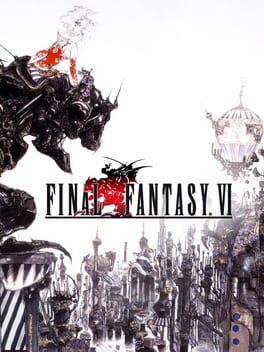
Final Fantasy VI is the sixth main installment in the Final Fantasy series, developed and published by Square. It was the final title in the series to feature two-dimensional graphics, and the first story that did not revolve around crystals. The game gives players up to fourteen playable characters, the largest cast in the series, and features the Active Time Battle pseudo-turn based menu command system. A party can consist of up to four characters, though some events require the player to assemble three different parties of up to four and switch between them. Each character has a unique command ability, such as Terra's Trance, Locke's Steal, Edgar's Tools or Sabin's Blitz, and can also learn Magic spells from earning AP from battles with magicite equipped. Each character's rare Desperation Attack will randomly activate after using the Attack command when at critical health.
The Legend of Zelda: Ocarina of Time is the fifth main installment of The Legend of Zelda series and the first to be released for the Nintendo 64. It was one of the most highly anticipated games of its age, and is listed among the greatest video games ever created by numerous websites and magazines. The gameplay of Ocarina of Time was revolutionary for its time, it has arguably made more of an impact on later games in the series than any of its predecessors even though they had the same cores of exploration, dungeons, puzzles and item usage. Among the gameplay mechanics, one of the most noteworthy is the time-traveling system. The game begins with the player controlling the child Link, but later on an adult Link becomes a playable character as well and each of them has certain unique abilities. Ocarina of Time also introduces the use of music to solve puzzles: as new songs are learned, they can be used to solve puzzles, gain access to new areas and warp to different locations. Dungeon exploration is somewhat more puzzle-oriented than in earlier games but they are not too complex.
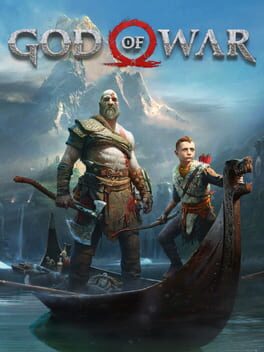
God of War is the sequel to God of War III as well as a continuation of the canon God of War chronology. Unlike previous installments, this game focuses on Norse mythology and follows an older and more seasoned Kratos and his son Atreus in the years since the third game. It is in this harsh, unforgiving world that he must fight to survive… and teach his son to do the same.