More games like The Last Grape
players who liked The Last Grape also liked:


The Lost Vikings is a puzzle-platform video game developed by Silicon & Synapse (now Blizzard Entertainment) and published by Interplay. The game features infinite opportunities of retries in case the player loses one of the Vikings. In 2015, The Lost Vikings were added as a playable hero in Heroes of the Storm, allowing players to control the three Vikings as individual units, making a unique departure from the typical heroes available. Character abilities: All three Vikings (Erik, Baleog and Olaf) have three health points which they can lose by getting hurt by enemies or by falling from great heights, and the ability to carry and use items, mainly keys, bombs, and food (which restore health points). Each of the Vikings has a unique set of abilities: Erik can run faster than the other two, can jump, and can bash through some walls (and enemies) with his helmet. Baleog can kill enemies with his sword, or from a distance with his bow (and a "life-time supply of arrows"). The bow can also be used to hit switches from a distance. Olaf can block enemies and their projectiles with his shield, and use his shield as a hang glider. Olaf's shield can also be used as a stepping stone for Erik to enable him to reach higher ground, which would not be possible without the shield.

Return to the roots of arcade NBA basketball in the 2010 installment of NBA Jam. Developed by EA Canada for seventh-generation game consoles, this rebirth brings back the gameplay, aesthetics, and gratuitous secrets of the original 1993 arcade game.

Roger Rabbit is the first game in the Crazy Castle series, known in the West as Bugs Bunny's Crazy Castle. The Roger Rabbit version was developed for the Famicom Disk System and released only in Japan.

This is a new SimCity that delivers unprecedented depth of simulation. The model-like world and detail of the simulation make this the most responsive and personal SimCity ever. This is also the most expansive city management game yet where you can control a region that delivers true multi-city scale and play a single city or up to 16 cities at once each with different specializations. Multiplayer is also a first for the series, which adds a new dimension to your game as your decisions impact both your city and your region and creates new ways to play by collaborating or competing to earn achievements.
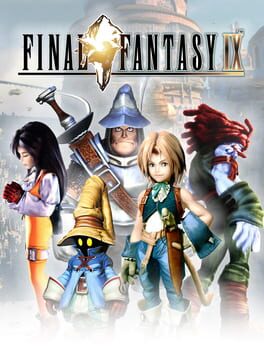
Final Fantasy IX is the ninth main installment in the FF series. The title is a return to the series's roots, with gameplay features and references to the past games featuring throughout, as well as a medieval fantasy setting and cartoonish art style as a break from the sci-fi slant style of Final Fantasy VII and Final Fantasy VIII.
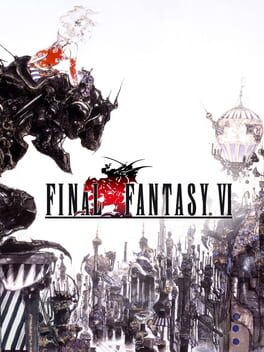
Final Fantasy VI is the sixth main installment in the Final Fantasy series, developed and published by Square. It was the final title in the series to feature two-dimensional graphics, and the first story that did not revolve around crystals. The game gives players up to fourteen playable characters, the largest cast in the series, and features the Active Time Battle pseudo-turn based menu command system. A party can consist of up to four characters, though some events require the player to assemble three different parties of up to four and switch between them. Each character has a unique command ability, such as Terra's Trance, Locke's Steal, Edgar's Tools or Sabin's Blitz, and can also learn Magic spells from earning AP from battles with magicite equipped. Each character's rare Desperation Attack will randomly activate after using the Attack command when at critical health.
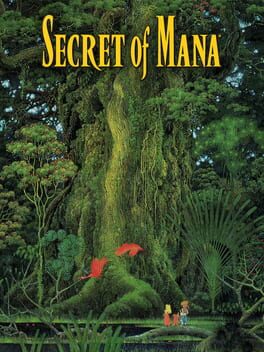
Initially released in Japan in 1993, Secret of Mana took the world by storm with its innovative real-time battle system and gorgeously rendered world. It continues to stand out among other action RPGs for its seamless gameplay that anyone from beginner to veteran can enjoy. One of the most memorable elements of the Mana series is the Ring Command menu system. With the single press of a button, a ring-shaped menu appears on the screen, where players can use items, change weapons, and do a variety of other actions without needing to switch screens. This Ring Command menu system for which the Mana series is so well known was first introduced in Secret of Mana and has since appeared in most games in the series. Play as Randi and his two companions, Primm and Popoi, as they adventure all around the world. At the center of our epic story is the mystical power of Mana. Battle the empire in its quest for control of Mana. Befriend the eight elementals who wield the forces of nature itself. Numerous encounters await at every turn.
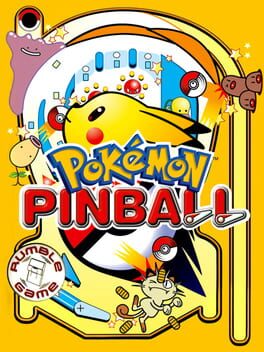
There are two tables in the game, red and blue. Each table has its own details and gameplay elements. Each table has different "locations" that you play, which determine which Pokémon are available for capture. A subset of available locations are displayed slot-machine style in the beginning of a game, and pressing A will select your starting location and launch the first ball into play. After that, each table has its own mechanism for advancing to the next location, including the locations not available at the start of the game. "Catch Mode," when activated, starts a 2 minute window of opportunity where you can attempt to capture a Pokémon. Once you activate "catch mode," you must hit the pop bumpers 6 times. Each hit unlocks 1/6 of an image of the Pokémon currently up for capture. Once the image is complete, the Pokémon appears on the table, where it must be hit 4 times with the ball to capture it. "Evolution Mode," when activated, starts a 2 minute window of opportunity where you select a captured Pokémon (from the current game in progress only) and attempt to evolve it into another form. This is the only way to add the evolved form to your Pokédex. Once you select a Pokémon, you must hit targets on the playfield. There are up to 6 targets, but only 3 of them have items in them you need to evolve a Pokémon. The others create a time-wasting sequence before you can hit targets again. If you hit a target with an item, the item appears on the playfield and must be collected with the ball. Once you've collected 3 items, the hole in the center of the board opens up. Sinking the ball in the hole successfully evolves the Pokémon.