
More games like Roary the Racing Car

players who liked Roary the Racing Car also liked:
![Boxart for Final Fantasy V: Advance [Subset - Four Job Fiesta]](https://playtracker.net/cdn-cgi/image/format=auto/https://playtracker-apollo.fra1.cdn.digitaloceanspaces.com/thumbnails/game_thumb_133199.png)
![Boxart for Mega Man: Powered Up [Subset - 468 Stages]](https://playtracker.net/cdn-cgi/image/format=auto/https://playtracker-apollo.fra1.cdn.digitaloceanspaces.com/thumbnails/game_thumb_128215.png)
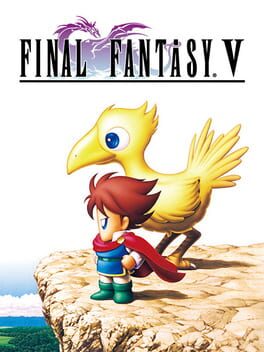
Final Fantasy V is a fantasy role-playing video game developed and published by Square in 1992 as a part of the Final Fantasy series. The game first appeared only in Japan on Nintendo's Super Famicom (known internationally as the Super Nintendo Entertainment System). It has been ported with minor differences to Sony's PlayStation and Nintendo's Game Boy Advance. An original video animation produced in 1994 called FINAL FANTASY: Legend of the Crystals serves as a sequel to the events depicted in the game. It was released for the PlayStation Network on April 6, 2011, in Japan. An enhanced port of the game, with new high-resolution graphics and a touch-based interface, was released for iPhone and iPad on March 28, 2013, and for Android on September 25, 2013. FINAL FANTASY V has been praised for the freedom of customization that the player has over the characters, achieved through the greatly expanded Job System. Despite being released only in Japan, the Super Famicom version sold more than two million copies. The PlayStation version has earned "Greatest Hits" status, selling more than 350,000 copies.
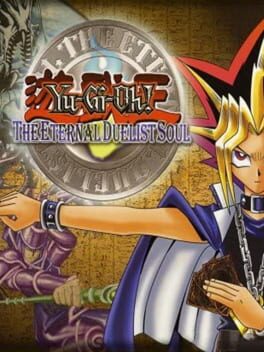
Yu-Gi-Oh! The Eternal Duelist Soul is a Yu-Gi-Oh! video game for the Game Boy Advance. It is the international version of Yu-Gi-Oh! Duel Monsters 5 Expert 1. Gameplay is similar to standard dueling rules, except that the Side Deck allows less than 15 cards, and is more for convenience of getting to cards for your Deck than switching between duels, as CPU duels are single duels rather than matches (with some exceptions in events).
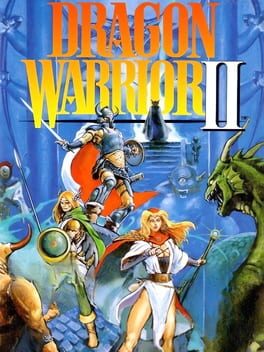
Dragon Warrior II is an early top-down RPG that expands and improves on its predecessor. Unlike the first game, Dragon Warrior II allows the player to join forces with two other characters, a magic-using princess and a wizard-warrior prince. Also including expanded monster battles involving up to 6 creatures and a much larger world, Dragon Warrior II is an important step in the evolution of the Dragon Warrior series.

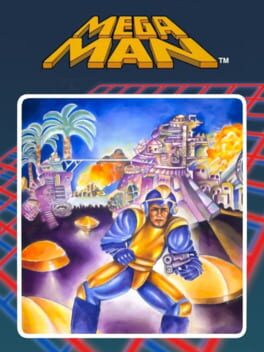
Experience the game that started it all! Play as cybernetic hero Mega Man as you battle to stop the evil scientist Dr. Wily and his Robot Masters from taking over the world! A classic platformer in every sense of the word, Mega Man features timeless 8-bit graphics, a memorable soundtrack, and balanced but challenging gameplay that combine to create one of the most iconic video games of all time. Mega Man, known as Rockman in Japan, is a 1987 action-platform video game developed and published by Capcom for the Nintendo Entertainment System (NES). It was directed by Akira Kitamura, with Nobuyuki Matsushima as lead programmer, and is the first game of the Mega Man franchise and the original video game series. Mega Man was produced by a small team specifically for the home console market, a first for Capcom, who previously focused on arcade titles.