
More games like Pokémon Sapphire Version

players who liked Pokémon Sapphire Version also liked:

Pokémon Gold, along with Pokémon Silver, are the sequels to Pokémon Red and Blue. They offer 100 new Pokémon to capture and train, 8 more Gyms to take on and a new Pokémon League challenge. Featuring an expanded post-game, Pokémon Gold and Silver additionally offer extra content from the previous entries in the series.
![Boxart for Pokémon FireRed Version [Subset - Professor Oak Challenge]](https://playtracker.net/cdn-cgi/image/format=auto/https://playtracker-apollo.fra1.cdn.digitaloceanspaces.com/thumbnails/game_thumb_128324.png)
Pokémon Diamond Version and Pearl Version are role-playing games (RPGs) developed by Game Freak and published by Nintendo for the Nintendo DS. With the enhanced remake Pokémon Platinum, the games comprise the fifth installment and fourth generation of the Pokémon series of RPGs. First released in Japan on September 28, 2006, the games were later released to North America, Australia, and Europe over the course of 2007. Like previous Pokémon games, Diamond and Pearl chronicle the adventures of a young Pokémon trainer as he/she trains and battles Pokémon while also thwarting the schemes of a criminal organization. The games add many new features, such as Internet play over the Nintendo Wi-Fi Connection and changes to battle mechanics and Pokémon Contests, along with addition of 107 new Pokémon. The games are independent of each other but feature largely the same plot and while both can be played separately, it is necessary to trade between them in order to complete the games' Pokédexes.
Pokemon Silver is a role-playing game played from a top-down perspective, in which the player explores the world, catches wild creatures called Pokemon, and trains them through turn-based battles. Set in the Johto region, it continues the core loop of building a team, earning Gym Badges, and completing the Pokedex by capturing, evolving, and trading creatures. This entry introduced 100 new Pokemon along with additions such as a real-time internal clock that affects certain events, Pokemon breeding, held items, and two new creature types. It supports linking with other games in the series to trade and battle.
Pokémon Green, along with Pokémon Red, are the first video games in the Pokémon series of games. They are the first paired versions of Generation I. Developed over the course of several years, Red and Green established several standards for later Pokémon games and sequels. They take place in the Kanto region, with the player having to collect eight Gym Badges to become the Pokémon Champion while also completing the Pokédex by collecting all 151 Pokémon.

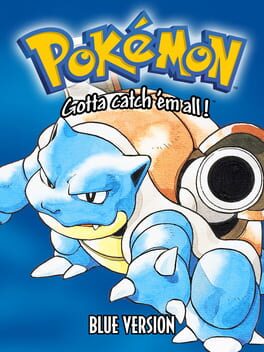
Pokémon Blue is the third core series Pokémon game released as a minor revision of Pokémon Red and Green, which were released earlier that year. It was thus the first solitary version in the core series of Pokémon games. Various fixes in the game include a graphics and sound upgrade, as well as the removal of several known glitches that had been found in the original pair. Outside of Japan, its graphics, game engine and script formed the basis of Pokémon Red and Blue, while the wild Pokémon and game-exclusive Pokémon lists were changed to match Red and Green.