
More games like Phantasy Star Online Episode I & II Plus
players who liked Phantasy Star Online Episode I & II Plus also liked:
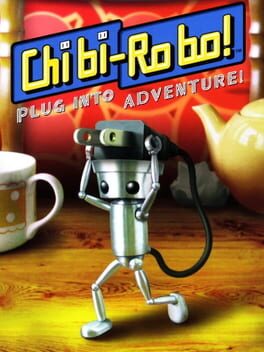
Like most families, the Sandersons bicker about money and cleaning. Unlike most families, though, they also have robotic spiders, aliens, and talking toys to worry about. Enter Chibi-Robo, a tiny robot programmed to spread happiness. Join him on his quest to restore order to the Sanderson house and SAVE THE WORLD!
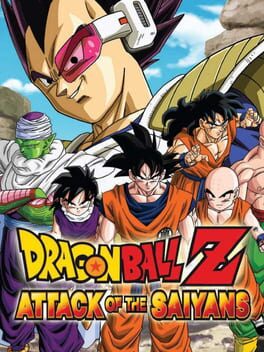
The game follows the Saiyan Saga of the original DBZ story starting from the World Tournament and Goku's triumphant defeat of Piccolo. Players take the role of Goku and travel the DBZ universe from jungle to Snow Mountain on their quest to victory. Dragon Ball Z: Attack of the Saiyans features a host of original features which will be sure to thrill fans, such as brand new gameplay, unique game modes, fun side quests and content never before seen in either the anime or manga series.
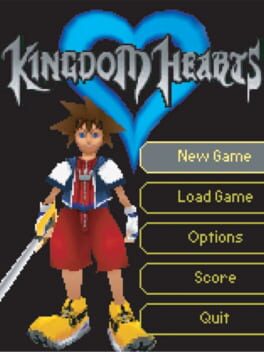
Kingdom Hearts brings back the gameplay elements featured in the original Kingdom Hearts, though it was developed exclusively for V Cast, Verizon Wireless's broadband services. Sora moves similar to a tank, with one button on the control pad moving him forward, another moving him backwards, and two more turning him left or right. Even with these new controls, Sora can still perform a number of moves aside from running and jumping. He can climb trees and ladders, grasp the edges of platforms and pull himself up, lift and throw objects, and use the Keyblade to slide down zip lines. Sora can still use the Keyblade and also magic, the first spell he learns being Blizzard, to fight like in Kingdom Hearts. Munny and Experience are still earned by defeating Heartless. As opposed to Kingdom Hearts, however, Kingdom Hearts introduced "assistant characters," such as the Caterpillar and Swordman Parrot, as opposed to guest party members.
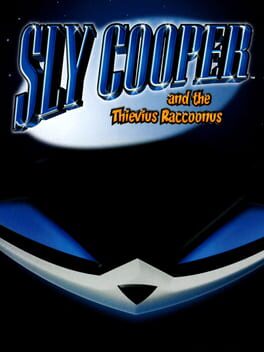
Sly Cooper and the Thievius Raccoonus is a stealth-platformer developed by Sucker Punch Productions and published by Sony Computer Entertainment. Released in 2002 for the PlayStation 2, the game follows Sly Cooper, a skilled raccoon thief, as he and his gang attempt to recover the Thievius Raccoonus, a book containing the secrets of his family's thieving legacy. The gameplay combines stealth, platforming, puzzle-solving, and light combat, and is noted for its cel-shaded visuals and humorous narrative. This game is divided into five worlds, each themed around a particular part of the world and the villain headquartered there. Most worlds are structured as a central hub with entrances to numerous individual levels. Each of the levels has a primary goals which earns the player a key. You must collect all the keys in the world to fight the world's boss. Many of the levels have a platformer structure. The objective of these worlds is to reach the location of the key. There are substantial stealth elements here as the player must dodge searchlights and trips lasers which set off alarms and avoid alerting guards. In addition to the main objective, there are clue bottles to find. Finding all the clues in a level allows you to open a safe with a page from the Thievius Raccoonus which grants a new ability of some sort. After getting this, there is also a master thief sprint where the player must get from the start of a level to the exit within a time limit.
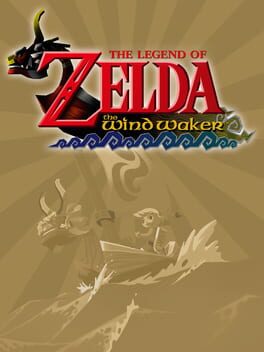
The Legend of Zelda: The Wind Waker is the first Zelda game for the Nintendo GameCube and also the first in the series to employ cel-shading, a lighting and texturing technique that results in the game having a cartoon-like appearance. Like its predecessors, The Wind Waker is an action game with puzzle-solving and light role-playing elements. Basic gameplay mechanics are similar to those found in Ocarina of Time, but it differentiates itself with its massive Great Sea which must be explored using a boat named King of Red Lions.
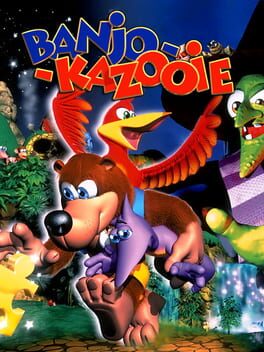
Trouble brews when Gruntilda the witch captures the unbearably beautiful cub, Tooty. But before the grisly hag can steal the bear's good looks, big brother Banjo and his fine-feathered friend, Kazooie, join forces to stop her. Combining their 24 moves and special powers, Banjo and Kazooie will fend off armies of beasts. Bear and bird must hunt down the 100 puzzle pieces and 900 musical notes that will ultimately lead them to Gruntilda. However. miles of swamp, desert, and snow and one bear of an adventure stand in their way.
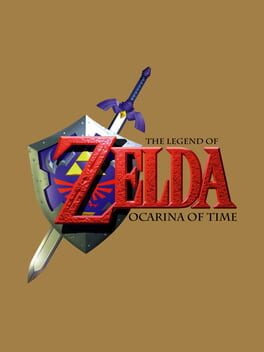
The Legend of Zelda: Ocarina of Time is the fifth main installment of The Legend of Zelda series and the first to be released for the Nintendo 64. It was one of the most highly anticipated games of its age, and is listed among the greatest video games ever created by numerous websites and magazines. The gameplay of Ocarina of Time was revolutionary for its time, it has arguably made more of an impact on later games in the series than any of its predecessors even though they had the same cores of exploration, dungeons, puzzles and item usage. Among the gameplay mechanics, one of the most noteworthy is the time-traveling system. The game begins with the player controlling the child Link, but later on an adult Link becomes a playable character as well and each of them has certain unique abilities. Ocarina of Time also introduces the use of music to solve puzzles: as new songs are learned, they can be used to solve puzzles, gain access to new areas and warp to different locations. Dungeon exploration is somewhat more puzzle-oriented than in earlier games but they are not too complex.
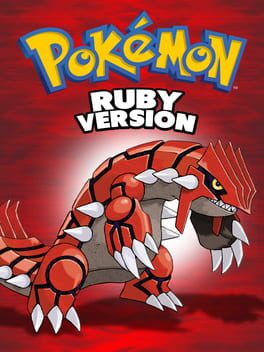
Sequel to Pokémon Gold and Silver Versions (1999), Pokémon Ruby and Sapphire Versions offer 135 new Pokémon, more complex battling and training systems, new crime organizations, a longer and more story-focused campaign and upgraded graphics to create a new and technically improved Pokémon experience.