
More games like God of War: Ghost of Sparta
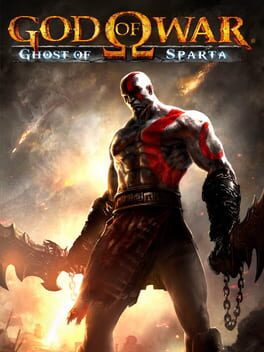
players who liked God of War: Ghost of Sparta also liked:

Kratos makes his inaugural appearance on a portable gaming platform in the third instalment of the God of War series. Chains of Olympus serves as a prequel, unfolding its narrative a decade before the events in the original God of War. While retaining the familiar gameplay dynamics of its predecessors, subtle modifications enhance the overall experience. Kratos embarks on a journey through various levels, engaging in relentless combat against foes and formidable bosses, deciphering puzzles based on manipulating boxes, and participating in quick-time events. Throughout his odyssey, he amasses red orbs to fortify his weapons and abilities, secures Gorgon eyeballs to augment his health, and acquires Phoenix feathers to amplify his magical prowess. The game's controls underwent refinement to harmonize with the reduced button configuration of the PSP. Dodging, for instance, now necessitates the utilization of both shoulder buttons and the analogue stick. The iconic Blades of Chaos, synonymous with the God of War series, make a return, accompanied by an array of new weapons and magical spells such as the Sun Shield, Efreet spell, and Light of Dawn. The narrative unfolds as the Gods dispatch Kratos to the city of Attica, charging him with the defence against an encroaching Persian army. However, as Morpheus unleashes chaos, Kratos finds himself compelled to harness his formidable powers to once again rescue the world from impending doom.
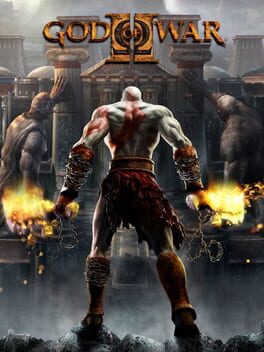
God of War II, an action-adventure hack-and-slash video game, was developed by Santa Monica Studio and published by Sony Computer Entertainment (SCE). Initially launched for the PlayStation 2, it serves as the second installment in the God of War series, the sixth in chronological order, and a sequel to 2005's God of War. The game is rooted in Greek mythology and unfolds in ancient Greece, revolving around the theme of vengeance. The protagonist, Kratos, is the new God of War, having defeated the former, Ares. However, Kratos is betrayed by Zeus, the King of the Olympian gods, who not only strips him of his godhood but also kills him. Dragged slowly to the Underworld, Kratos is rescued by the Titan Gaia, who guides him to seek out the Sisters of Fate. These entities have the power to enable time travel, allowing Kratos to prevent his betrayal, and ultimately seek revenge on Zeus.
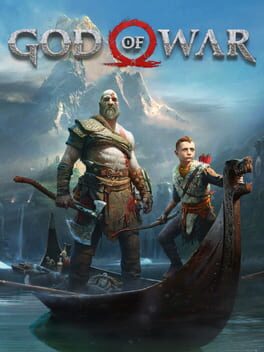
God of War is the sequel to God of War III as well as a continuation of the canon God of War chronology. Unlike previous installments, this game focuses on Norse mythology and follows an older and more seasoned Kratos and his son Atreus in the years since the third game. It is in this harsh, unforgiving world that he must fight to survive… and teach his son to do the same.
As a mischievous schoolboy, you’ll stand up to bullies, get picked on by teachers, play pranks, win or lose the girl, and ultimately learn to navigate the obstacles of the worst school around, Bullworth Academy - a corrupt and crumbling prep school with an uptight facade.
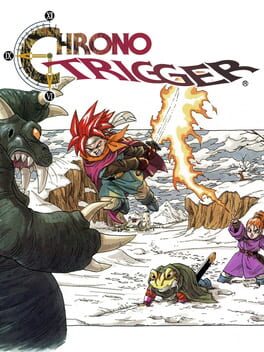
In this turn-based Japanese RPG, young Crono must travel through time through a misfunctioning teleporter to rescue his misfortunate companion and take part in an intricate web of past and present perils. The adventure that ensues soon unveils an evil force set to destroy the world, triggering Crono's race against time to change the course of history and bring about a brighter future.
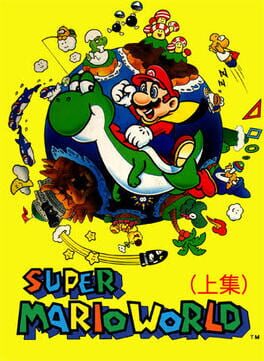
Super Mario World (超級馬里奧世界) is a bootleg port of the SNES launch title of the same name (Super Mario World) developed by Hummer Team and released in 1995. This is one of the more well-known examples of bootleg ports to the Famicom, as it comparatively manages to retain most of the original SNES game's elements.
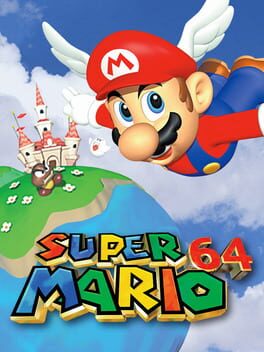
Mario is super in a whole new way! Combining the finest 3-D graphics ever developed for a video game and an explosive soundtrack, Super Mario 64 becomes a new standard for video games. It's packed with bruising battles, daunting obstacle courses, and underwater adventures. Retrieve the Power Stars from their hidden locations and confront your arch-nemesis— Bowser, King of the Koopas! • Run freely in a grassy meadow, tip-toe through a gloomy dungeon, climb to the top of a mountain, or take a swim in the moat! • Leap headfirst into a watery painting and soon you'll be searching for the surface in an underwater realm! • On-the-fly, 3-D rendered gameplay delivers the action of ruthless enemy attacks from every angle! • Find the Caps that give Mario super powers and ponder the mysteries of the pyramid; you can even race Koopas for fabulous prizes! • With the Nintendo 64 Controller and its analog Control Stick, Mario can crawl, kick down obstacles, swim, do reverse flips, and even stick the landing on his backwards somersault! • Saved game information is stored for up to four players in memory.