
More games like Final Fantasy X: International
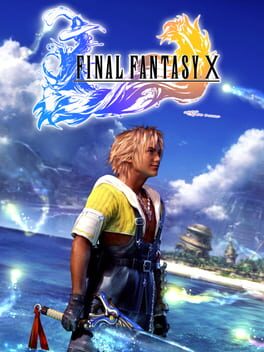
players who liked Final Fantasy X: International also liked:
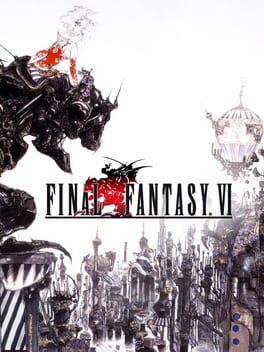
Final Fantasy VI is the sixth main installment in the Final Fantasy series, developed and published by Square. It was the final title in the series to feature two-dimensional graphics, and the first story that did not revolve around crystals. The game gives players up to fourteen playable characters, the largest cast in the series, and features the Active Time Battle pseudo-turn based menu command system. A party can consist of up to four characters, though some events require the player to assemble three different parties of up to four and switch between them. Each character has a unique command ability, such as Terra's Trance, Locke's Steal, Edgar's Tools or Sabin's Blitz, and can also learn Magic spells from earning AP from battles with magicite equipped. Each character's rare Desperation Attack will randomly activate after using the Attack command when at critical health.
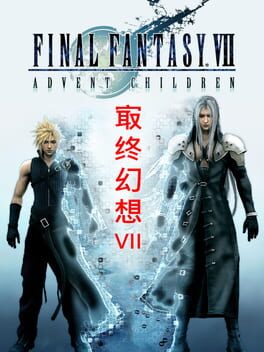
Final Fantasy VII is an unlicensed "Shanzhai" demake of SquareSoft role-playing game of the same name, originally released for PlayStation in 1997. This two-dimensional "port" was developed and published by Chinese company Shenzhen Nanjing Technology for Subor, a Nintendo's Family Computer clone console series (internationally known as the NES). The cartridge itself is unique, as it is structurally different from licensed Famicom cartridges in terms of hardware and programming.
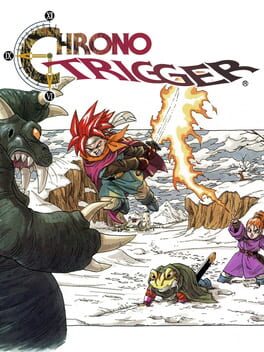
In this turn-based Japanese RPG, young Crono must travel through time through a misfunctioning teleporter to rescue his misfortunate companion and take part in an intricate web of past and present perils. The adventure that ensues soon unveils an evil force set to destroy the world, triggering Crono's race against time to change the course of history and bring about a brighter future.

Pokémon Red, along with Pokémon Green, are the first video games in the Pokémon series of games. They are the first paired versions of Generation I. Developed over the course of several years, Red and Green established several standards for later Pokémon games and sequels. They take place in the Kanto region, with the player having to collect eight Gym Badges to become the Pokémon Champion while also completing the Pokédex by collecting all 151 Pokémon.
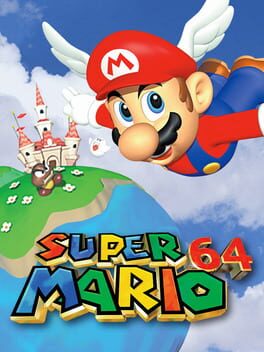
Mario is super in a whole new way! Combining the finest 3-D graphics ever developed for a video game and an explosive soundtrack, Super Mario 64 becomes a new standard for video games. It's packed with bruising battles, daunting obstacle courses, and underwater adventures. Retrieve the Power Stars from their hidden locations and confront your arch-nemesis— Bowser, King of the Koopas! • Run freely in a grassy meadow, tip-toe through a gloomy dungeon, climb to the top of a mountain, or take a swim in the moat! • Leap headfirst into a watery painting and soon you'll be searching for the surface in an underwater realm! • On-the-fly, 3-D rendered gameplay delivers the action of ruthless enemy attacks from every angle! • Find the Caps that give Mario super powers and ponder the mysteries of the pyramid; you can even race Koopas for fabulous prizes! • With the Nintendo 64 Controller and its analog Control Stick, Mario can crawl, kick down obstacles, swim, do reverse flips, and even stick the landing on his backwards somersault! • Saved game information is stored for up to four players in memory.