
More games like Dragon Quest Monsters: Joker
players who liked Dragon Quest Monsters: Joker also liked:
Grandia 2 is a 3D RPG, viewed from a top-down perspective for most of the game and a 3rd person view during battle. Controlling Ryudo, the player will explore various locations, locating townspeople and objects within an area to interact with. Towns and dungeons are displayed in the same manner, though dungeons tend to be mazes filled with monsters and towns tend to be friendly areas filled instead with conversation and shops. Any monsters present in these areas will be shown walking around. Walking over to and touching the monster in any way will activate a battle. If the monster notices the player approaching it is considered a normal battle, if Ryudo is able to approach undetected the player's party will gain the initiative in battle, if any party member besides Ryudo is approached by the enemy then the party loses initiative.

As a student of Astral the wizard, you and your friends study all the usual subjects: reading, writing, and sword fighting. As your time at school draws to an end, dark events are taking place on the island of Grans. The two Jewels which seal the Door to Darkness have been stolen, allowing a creature of awesome power to be unleashed. Finding where the Jewels were taken, and why, is a task only the bravest of adventurers can undertake.
The incredible sequel to the best-selling RPG hit Breath of Fire is here! You are the last member of the Dragon clan, fighting to rid the world of a growing evil. A cast of unusual and exciting companions joins you in your adventures across a wondrous land full of magic and mystery. You'll find strange mystic items, memorable monsters and exotic locations in your quest to conquer evil. There's strategy and spellcasting galore in the hours of compelling action and adventure that awaits you. Breath of Fire II is the ultimate in RPG excitement!
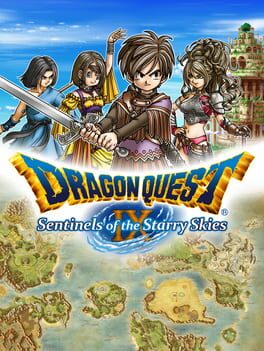
In Dragon Quest IX: Sentinels of the Starry Skies, players begin their adventure as a city guardian who is sent to retrieve a sacred trees fruits, which have the power to grant wishes. Players travel the world, conquer fearsome monsters and unravel an epic storyline. During their journey, players will encounter mighty opponents in fast-paced battles, and also interact with a colorful cast of characters.
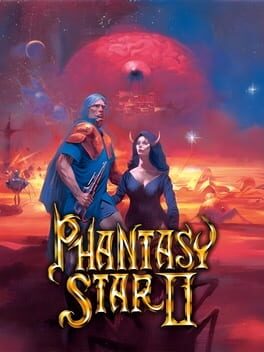
Gameplay is similar to the original Phantasy Star, the first game in the series. Its battle system is turn-based, allowing the player to choose commands for their party of up to four characters. Each of the eight characters has a different set of preferred weapons and armor, as well as techniques, suited to the character's job. The player must defeat enemies in the overworld and in dungeons to advance in the game. The game abandoned the first-person view that the first game used for dungeons and battles. Phantasy Star II instead uses a top-down perspective for exploration and a third-person view in battles.
Grandia is a role-playing video game developed by Game Arts and published by Entertainment Software Publishing for the Sega Saturn console as the first game in their Grandia series. Initially released in Japan in 1997, the game was later ported to the PlayStation in 1999, with an English version of the game appearing on the platform in North America in the following September by Sony Computer Entertainment America, and later in Europe in March 2000 by Ubisoft. The game was produced by much of the same staff who worked on the company's previous role-playing endeavor, the Lunar series, including producer Yoichi Miyagi and music composer Noriyuki Iwadare. Since its release, Grandia has become notable for its combat mechanics, which have been carried over to future games within the franchise, and has spawned two spin-off titles – Grandia: Digital Museum and Grandia: Parallel Trippers – both released exclusively in Japan. In celebration of the announcement of renewing development on Grandia Online, which acts as a prequel to Grandia, the game was re-released on Sony's PlayStation Network platform in Japan as a downloadable title in April 2009 and in North America on February 25, 2010. It was re-released in Europe on November 10, 2010.
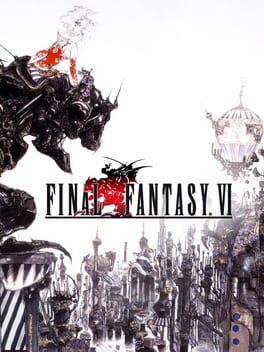
Final Fantasy VI is the sixth main installment in the Final Fantasy series, developed and published by Square. It was the final title in the series to feature two-dimensional graphics, and the first story that did not revolve around crystals. The game gives players up to fourteen playable characters, the largest cast in the series, and features the Active Time Battle pseudo-turn based menu command system. A party can consist of up to four characters, though some events require the player to assemble three different parties of up to four and switch between them. Each character has a unique command ability, such as Terra's Trance, Locke's Steal, Edgar's Tools or Sabin's Blitz, and can also learn Magic spells from earning AP from battles with magicite equipped. Each character's rare Desperation Attack will randomly activate after using the Attack command when at critical health.