
More games like Dragon Quest III
players who liked Dragon Quest III also liked:
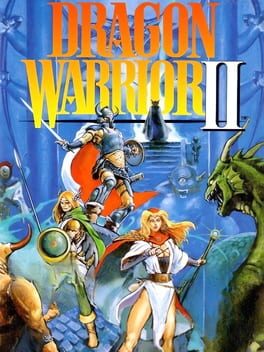
Dragon Warrior II is an early top-down RPG that expands and improves on its predecessor. Unlike the first game, Dragon Warrior II allows the player to join forces with two other characters, a magic-using princess and a wizard-warrior prince. Also including expanded monster battles involving up to 6 creatures and a much larger world, Dragon Warrior II is an important step in the evolution of the Dragon Warrior series.
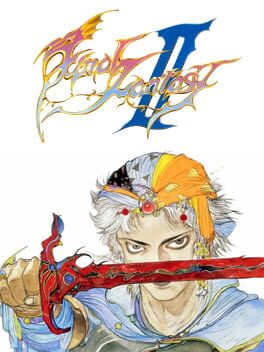
Final Fantasy II is the second installment in the Final Fantasy series, developed and published by Squaresoft. It was directed by Hironobu Sakaguchi, with Yoshitaka Amano designing the characters and Nobuo Uematsu composing the score. It was notable for being one of the first story-intensive RPGs released for console systems, and introducing many series staples, including chocobos and a character named Cid. Its story is unrelated to the original FINAL FANTASY, and its gameplay is a major departure from the previous title for eliminating the traditional experience-based progression system.
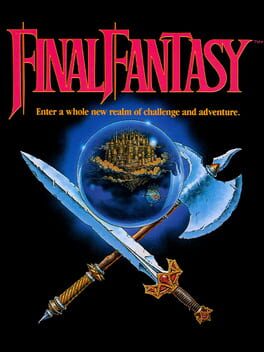
Final Fantasy, also known as FFI in re-releases, is the first role-playing game title in Square's flagship Final Fantasy series. The game puts players in control of four characters known as the Warriors of Light, and begins by asking the player to select the classes and names of each. The Warriors of Light can traverse the maps of dungeons and towns, which are connected by a world map, and will run into random encounters with enemies or fight bosses.
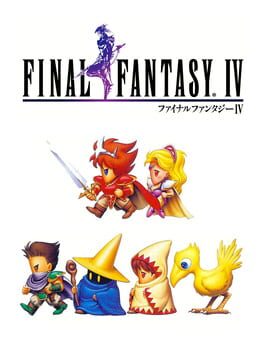
FINAL FANTASY IV is the fourth main installment in the FINAL FANTASY series, developed and published by Squaresoft. It was released in July 1991 for the Super Nintendo Entertainment System in Japan, and released as FINAL FANTASY II in North America in October 1991 with alterations made due to Nintendo of America's guidelines at the time.
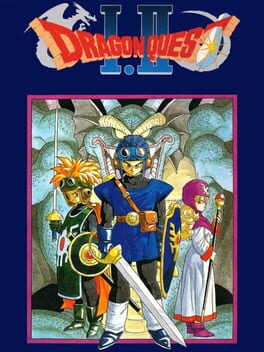
All is darkness. The Dragon Lord has captured the Princess and stolen The Legendary Hero's Ball of Light! You are the Legendary Hero's heir. You have been assigned a most dangerous task: to rescue the King's daughter and retrieve the Ball of Light. The journey ahead will be tough, but it is your destiny. Three Sages await your arrival, each willing to reward you with mystical items of great power Gather these three items, let your wits be about you as you gain experience, weapons and armor as you battle your way through Alefgard. Rest if you must! Search out the Dragon Lord's lair and face your destiny, in the role playing epic, Dragon Quest.
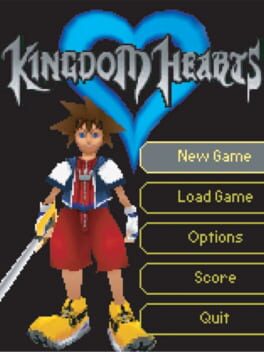
Kingdom Hearts brings back the gameplay elements featured in the original Kingdom Hearts, though it was developed exclusively for V Cast, Verizon Wireless's broadband services. Sora moves similar to a tank, with one button on the control pad moving him forward, another moving him backwards, and two more turning him left or right. Even with these new controls, Sora can still perform a number of moves aside from running and jumping. He can climb trees and ladders, grasp the edges of platforms and pull himself up, lift and throw objects, and use the Keyblade to slide down zip lines. Sora can still use the Keyblade and also magic, the first spell he learns being Blizzard, to fight like in Kingdom Hearts. Munny and Experience are still earned by defeating Heartless. As opposed to Kingdom Hearts, however, Kingdom Hearts introduced "assistant characters," such as the Caterpillar and Swordman Parrot, as opposed to guest party members.
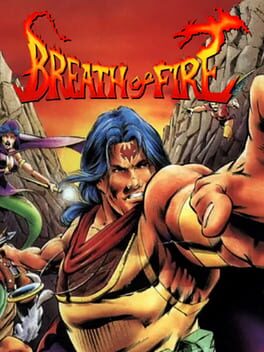
Recognized by Capcom as their first traditional role-playing video game, Breath of Fire would set the precedent for future entries in the series, and features character designs by company head of development Keiji Inafune, as well as music by members of Capcom's in-house sound team Alph Lyla. In 2001, the game was re-released for the Game Boy Advance handheld system with new save features and minor graphical enhancements, with the English version being released in Europe for the first time. Set in a fantasy world, Breath of Fire follows the journey of a boy named Ryu, one of the last surviving members of an ancient race with the ability to transform into mighty dragons, as he searches the world for his sister. During his quest, Ryu meets other warriors who share his quest, and comes into conflict with the Dark Dragon Clan, a militaristic empire who seeks to take over the world by reviving a mad goddess. The game experienced mostly positive reception upon release, and was followed by a direct sequel, Breath of Fire II, in 1994.
The Legend of Zelda: Ocarina of Time is the fifth main installment of The Legend of Zelda series and the first to be released for the Nintendo 64. It was one of the most highly anticipated games of its age, and is listed among the greatest video games ever created by numerous websites and magazines. The gameplay of Ocarina of Time was revolutionary for its time, it has arguably made more of an impact on later games in the series than any of its predecessors even though they had the same cores of exploration, dungeons, puzzles and item usage. Among the gameplay mechanics, one of the most noteworthy is the time-traveling system. The game begins with the player controlling the child Link, but later on an adult Link becomes a playable character as well and each of them has certain unique abilities. Ocarina of Time also introduces the use of music to solve puzzles: as new songs are learned, they can be used to solve puzzles, gain access to new areas and warp to different locations. Dungeon exploration is somewhat more puzzle-oriented than in earlier games but they are not too complex.