
More games like Digimon World DS
players who liked Digimon World DS also liked:
This 3D board game consists of a series of duels, which are played with cards. The game has been split up in a Campaign Mode, in which you take on all levels of the Monster Coliseum on your own, a Free Battle Mode where you play skirmish matches against enemies defeated in the campaign, and a versus mode to take on a human opponent. Before starting, you have to choose a symbol, assign parameters to it (based on monster points, action points and power points) and buy a starter kit card deck. In a typical campaign game, you start in the entrance hall, where you manage your cards and monsters. To duel, you choose one of the four areas with five levels each, and defeat the opponents. New monsters are acquired by winning the match. The turn-based duels are played as a card game. Both characters start with a deck of cards and a number of health points. When a health status reaches zero, the battle is over. You attack your opponent by summoning monsters and assigning abilities to them. Trick cards can be used to gain both offensive and defensive advantages. Before each duel, you have to pick a monster that is up for ante, and the fighting is influenced by various parameters, including the land form you are playing on.
Grandia is a role-playing video game developed by Game Arts and published by Entertainment Software Publishing for the Sega Saturn console as the first game in their Grandia series. Initially released in Japan in 1997, the game was later ported to the PlayStation in 1999, with an English version of the game appearing on the platform in North America in the following September by Sony Computer Entertainment America, and later in Europe in March 2000 by Ubisoft. The game was produced by much of the same staff who worked on the company's previous role-playing endeavor, the Lunar series, including producer Yoichi Miyagi and music composer Noriyuki Iwadare. Since its release, Grandia has become notable for its combat mechanics, which have been carried over to future games within the franchise, and has spawned two spin-off titles – Grandia: Digital Museum and Grandia: Parallel Trippers – both released exclusively in Japan. In celebration of the announcement of renewing development on Grandia Online, which acts as a prequel to Grandia, the game was re-released on Sony's PlayStation Network platform in Japan as a downloadable title in April 2009 and in North America on February 25, 2010. It was re-released in Europe on November 10, 2010.
"The ultimate ninja battle returns! Battle the best in the land with intense, anime-style head-to-head ninja fighting with over 30 playable characters and 16 unique stages. Choose from more than 60 exciting missions, test your skills with challenging mini-games or play through the anime storyline - and even unlock an original story - in the all-new mode, Ultimate Road. Earn money and points to unlock tons of bonus content as you unleash your chakra and ascend the ranks on your way to becoming the greatest ninja of all!"
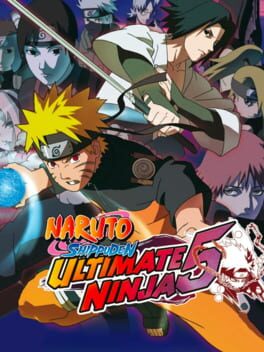
This is the fifth installment in the Naruto: Ultimate Ninja series. The game continues the Naruto Shippūden storyline, and includes the first meeting between Sasuke and Naruto during this timeline.
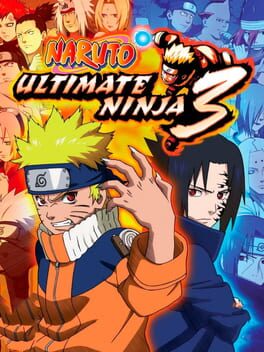
NARUTO: Ultimate Ninja 3 makes leaps in the franchise with a host of “firsts” for the series. Players can now live through and be a part of all the major events that defined Story Arc 1 in Heroes History mode. Also, ninja-in-training can customize their characters with the Ultimate Jutsu which gives them that extra bit of edge during battle and allows them to earn points towards upgrading their strength, defense, chakra, agility and other special abilities. Turn playable characters into more powerful ninja of unprecedented size or summon giant creatures as allies with the new Summoning mode. In addition, NARUTO fans throughout North America can experience the game in both English and original Japanese voice over. In keeping with the tradition of the series, an exclusive and original story has players exploring the massive 3D rendered Hidden Leaf Village, participating in battle royale matches and completing more than 55 missions. The experience doesn’t stop there as tons of unlockable content are available to offer loads of replay value including movies, music and cards
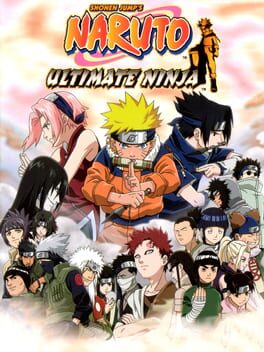
For the first time in the PS2, explore the incredible world of Naruto Uzumaki on the console. Players can select from 14 key characters taken straight from the anime, including Naruto Uzumaki, the young ninja-in-training, and his two ninja-school classmates Sakura and Sasuke. With its opulent visual style and broad range of gameplay modes Naruto: Ultimate Ninja is a game for arcade-fighter and Naruto fans alike.
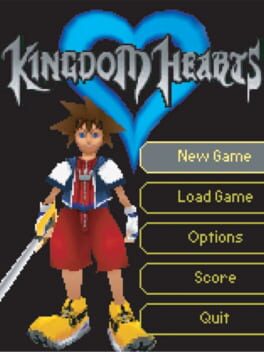
Kingdom Hearts brings back the gameplay elements featured in the original Kingdom Hearts, though it was developed exclusively for V Cast, Verizon Wireless's broadband services. Sora moves similar to a tank, with one button on the control pad moving him forward, another moving him backwards, and two more turning him left or right. Even with these new controls, Sora can still perform a number of moves aside from running and jumping. He can climb trees and ladders, grasp the edges of platforms and pull himself up, lift and throw objects, and use the Keyblade to slide down zip lines. Sora can still use the Keyblade and also magic, the first spell he learns being Blizzard, to fight like in Kingdom Hearts. Munny and Experience are still earned by defeating Heartless. As opposed to Kingdom Hearts, however, Kingdom Hearts introduced "assistant characters," such as the Caterpillar and Swordman Parrot, as opposed to guest party members.
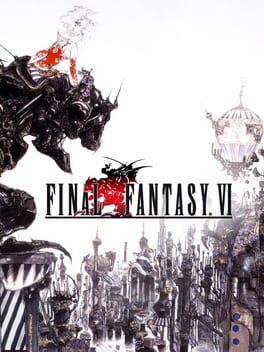
Final Fantasy VI is the sixth main installment in the Final Fantasy series, developed and published by Square. It was the final title in the series to feature two-dimensional graphics, and the first story that did not revolve around crystals. The game gives players up to fourteen playable characters, the largest cast in the series, and features the Active Time Battle pseudo-turn based menu command system. A party can consist of up to four characters, though some events require the player to assemble three different parties of up to four and switch between them. Each character has a unique command ability, such as Terra's Trance, Locke's Steal, Edgar's Tools or Sabin's Blitz, and can also learn Magic spells from earning AP from battles with magicite equipped. Each character's rare Desperation Attack will randomly activate after using the Attack command when at critical health.