
More games like Digimon World 4
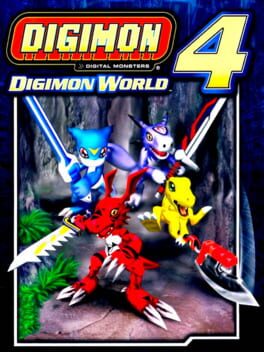
players who liked Digimon World 4 also liked:
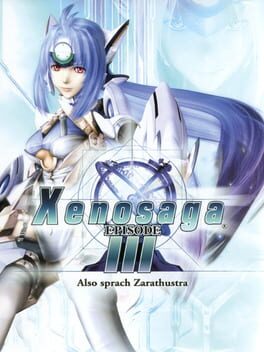
The story of Xenosaga III starts a year after "Xenosaga II" ended. Shion has resigned from Vector Industries after learning that the company is deeply connected to the appearance of the Gnosis. She instead joins Scientia, an underground organization working to unveil Vector's secrets in order to bring them down. Uncover the truth and save mankind in the finale of the Xenosaga series which boasts over 3 hours of movies, an updated battle system, and an improved customization feature with more in-depth character specialization and diversification and higher rewards for strategic party management. This RPG also includes an easily accessible database feature, the "Xeno Bible" and a mini-game with over 50 levels that challenges both you and your friends.
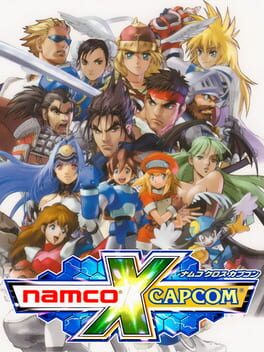
Namco X Capcom is an action tactical role-playing video game developed by and featuring characters from games produced by companies Namco and Capcom. The game centres on two original characters created for it, Reiji Arisu and Xiaomu. The two of them work for a special unit called Shinra, which is tasked with investigating spirits and other otherworldly disturbances. The game is a hybrid of action and tactical role-playing games. Movement is done on a square grid with turns being determined by figuring out which character has the highest AP. On the player's turn, he or she can move his character into position and choose to attack an enemy.
![Boxart for Final Fantasy V: Advance [Subset - Four Job Fiesta]](https://playtracker.net/cdn-cgi/image/format=auto/https://playtracker-apollo.fra1.cdn.digitaloceanspaces.com/thumbnails/game_thumb_133199.png)
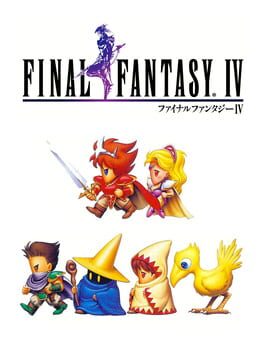
FINAL FANTASY IV is the fourth main installment in the FINAL FANTASY series, developed and published by Squaresoft. It was released in July 1991 for the Super Nintendo Entertainment System in Japan, and released as FINAL FANTASY II in North America in October 1991 with alterations made due to Nintendo of America's guidelines at the time.
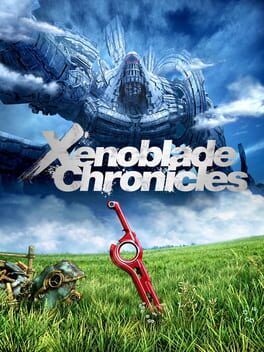
Xenoblade Chronicles follows Shulk and his band of friends as they search for answers about the mysterious "Monado" sword and defend their homeland from violent robotic creatures known as the Mechon. The game contains an open world design and strongly emphasizes exploration due to the world's large size. The game was very well received by critics, with many citing it as a great example of innovation and improvement in Japanese role-playing video games. The game has spawned a sub-series of the larger "Xeno" series, including Xenoblade Chronicles X (Wii U) and Xenoblade Chronicles 2 (Switch).
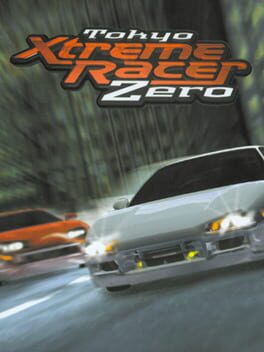
Tokyo Xtreme Racer Zero is a racing game developed by Genki for PlayStation 2. Despite its name, it is set between Tokyo Xtreme Racer 2 and Drift, and has enhanced sound and graphics. The game was released in Japan as Shutokou Battle 0, but was also a release in North America. The game was released in a PAL version in Europe and Australia under the title Tokyo Xtreme Racer (not to be confused with the Dreamcast title of the same name). This is the first game in the series that has been released on a platform other than the Dreamcast. Zero was originally to be released on the Dreamcast but was then canceled and moved to the PlayStation 2. The Tokyo Xtreme Racer series has produced a total of six games, the first four being U.S. localizations of the first four Shutokou Battle series games and the final two being U.S. localizations of the first and third Kaido Battle series games.
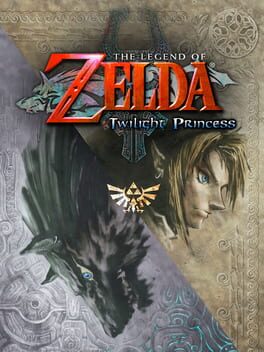
The Legend of Zelda: Twilight Princess is the last Zelda game for GameCube, it was highly anticipated by many members of the gaming community and was regarded as finally fulfilling the dreams of those who wanted a much more realistic and mature game than the ones before. The art is similar to the naturalistic style of Ocarina of Time, rather than the cel-shaded look of The Wind Waker. The main adventure takes place in several provinces with dungeons and temples. New to this game is the ability for Link to transform into a Wolf when entering the Twilight. As a wolf, Link can use his senses to solve puzzles and get past obstacles, he can also dig holes to find hearts and rupees. Twilight Princess has received universal acclaim from reviewers and journalists, who cited it as the greatest Zelda game of all time.

Originally intended to be the fourth installment in the Resident Evil series, Devil May Cry is an action-adventure game that introduced a host of new elements to the gaming community. Chief among them is the Stylish Rank, which grades the player's performance in combat. The game is split into Missions, which are individually scored according to various factors, such as Orbs gathered and damage taken. Additionally, Devil May Cry did away with the pre-rendered backgrounds of prior Resident Evil games in order to allow for a dynamic camera system.