
More games like Breath of Fire II
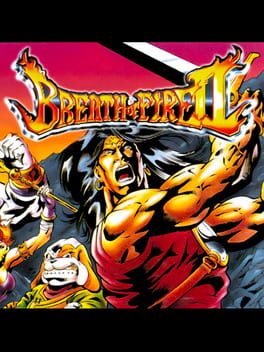
players who liked Breath of Fire II also liked:
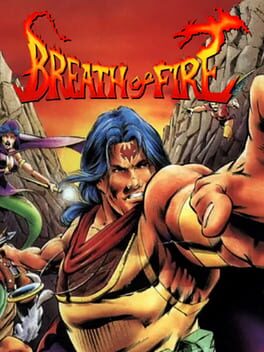
Recognized by Capcom as their first traditional role-playing video game, Breath of Fire would set the precedent for future entries in the series, and features character designs by company head of development Keiji Inafune, as well as music by members of Capcom's in-house sound team Alph Lyla. In 2001, the game was re-released for the Game Boy Advance handheld system with new save features and minor graphical enhancements, with the English version being released in Europe for the first time. Set in a fantasy world, Breath of Fire follows the journey of a boy named Ryu, one of the last surviving members of an ancient race with the ability to transform into mighty dragons, as he searches the world for his sister. During his quest, Ryu meets other warriors who share his quest, and comes into conflict with the Dark Dragon Clan, a militaristic empire who seeks to take over the world by reviving a mad goddess. The game experienced mostly positive reception upon release, and was followed by a direct sequel, Breath of Fire II, in 1994.
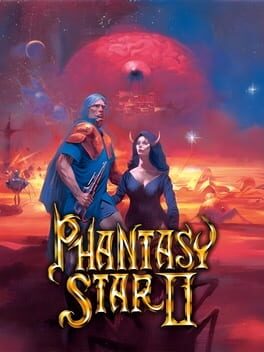
Gameplay is similar to the original Phantasy Star, the first game in the series. Its battle system is turn-based, allowing the player to choose commands for their party of up to four characters. Each of the eight characters has a different set of preferred weapons and armor, as well as techniques, suited to the character's job. The player must defeat enemies in the overworld and in dungeons to advance in the game. The game abandoned the first-person view that the first game used for dungeons and battles. Phantasy Star II instead uses a top-down perspective for exploration and a third-person view in battles.
Grandia is a role-playing video game developed by Game Arts and published by Entertainment Software Publishing for the Sega Saturn console as the first game in their Grandia series. Initially released in Japan in 1997, the game was later ported to the PlayStation in 1999, with an English version of the game appearing on the platform in North America in the following September by Sony Computer Entertainment America, and later in Europe in March 2000 by Ubisoft. The game was produced by much of the same staff who worked on the company's previous role-playing endeavor, the Lunar series, including producer Yoichi Miyagi and music composer Noriyuki Iwadare. Since its release, Grandia has become notable for its combat mechanics, which have been carried over to future games within the franchise, and has spawned two spin-off titles – Grandia: Digital Museum and Grandia: Parallel Trippers – both released exclusively in Japan. In celebration of the announcement of renewing development on Grandia Online, which acts as a prequel to Grandia, the game was re-released on Sony's PlayStation Network platform in Japan as a downloadable title in April 2009 and in North America on February 25, 2010. It was re-released in Europe on November 10, 2010.
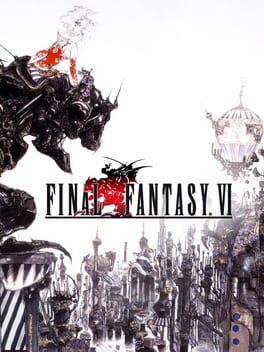
Final Fantasy VI is the sixth main installment in the Final Fantasy series, developed and published by Square. It was the final title in the series to feature two-dimensional graphics, and the first story that did not revolve around crystals. The game gives players up to fourteen playable characters, the largest cast in the series, and features the Active Time Battle pseudo-turn based menu command system. A party can consist of up to four characters, though some events require the player to assemble three different parties of up to four and switch between them. Each character has a unique command ability, such as Terra's Trance, Locke's Steal, Edgar's Tools or Sabin's Blitz, and can also learn Magic spells from earning AP from battles with magicite equipped. Each character's rare Desperation Attack will randomly activate after using the Attack command when at critical health.
Final Fantasy I & II: Dawn of Souls is a compilation of the first two games in the Final Fantasy series. Graphically, it is similar to the previously released enhanced remakes of both games for the WonderSwan Color.

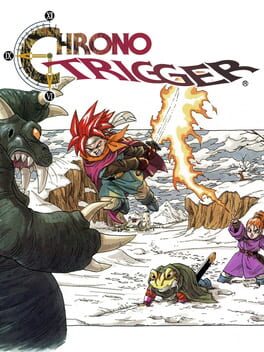
In this turn-based Japanese RPG, young Crono must travel through time through a misfunctioning teleporter to rescue his misfortunate companion and take part in an intricate web of past and present perils. The adventure that ensues soon unveils an evil force set to destroy the world, triggering Crono's race against time to change the course of history and bring about a brighter future.

Pokémon Red, along with Pokémon Green, are the first video games in the Pokémon series of games. They are the first paired versions of Generation I. Developed over the course of several years, Red and Green established several standards for later Pokémon games and sequels. They take place in the Kanto region, with the player having to collect eight Gym Badges to become the Pokémon Champion while also completing the Pokédex by collecting all 151 Pokémon.