More games like Black Belt Challenge
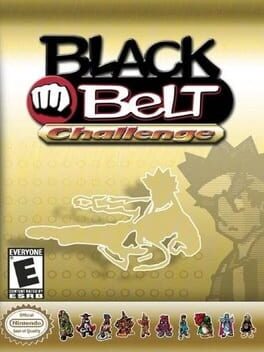
players who liked Black Belt Challenge also liked:
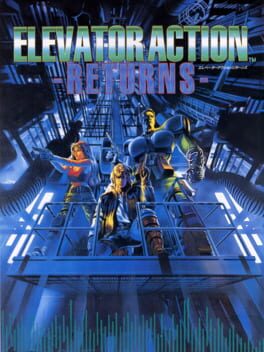
Elevator Action Returns, also known as Elevator Action II, is a 1994 run and gun arcade game developed and published by Taito. It is the sequel to Elevator Action (1983), featuring a much more gritty and realistic setting. Returns retains the elevator-based gimmick from the original, but expands the gameplay system and replaces the spy motif with a new scenario involving a paramilitary team fighting against a terrorist group.
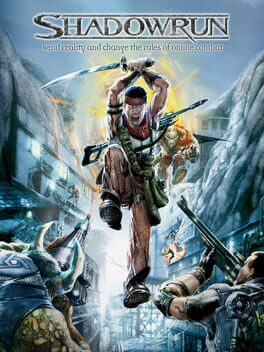
Shadowrun is a first-person shooter introducing mild cyberpunk elements to the gameplay. The game takes place in Brazil in the year 2031: before the events that shaped the Shadowrun universe. The player chooses between two factions to play as: The megacorp RNA Global, and the resistance group known as The Lineage. Playable races are Human, Elf, Troll, and Dwarf. Each race has their own unique racial traits.

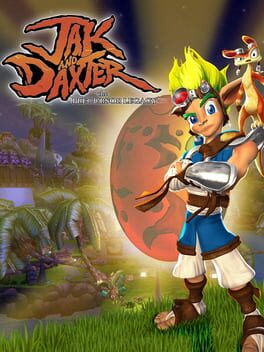
Jak and Daxter: The Precursor Legacy is a 2001 platform video game developed by Naughty Dog and published by Sony Computer Entertainment for the Sony PlayStation 2 on December 4, 2001, as the first game of the Jak and Daxter series. The game follows the protagonist, a young teenager named Jak, as he tries to help his friend Daxter after he is transformed into an "ottsel", a fictional hybrid of an otter and a weasel. The game offers a large range of missions, collectables and objectives, often in the form of minigames, which provide a variety of gameplay experiences, as well as puzzles and platforming stages, which are completed by the player to proceed with the story.
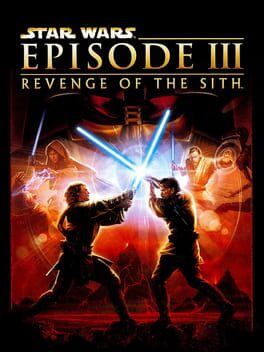
Third-person action/adventure game, Star Wars: Episode III, delivers the ultimate Jedi action experience as Anakin Skywalker and Obi-Wan Kenobi join forces in fierce battles and heroic lightsaber duels until one's lust for power and the other's devotion to duty leads to a final confrontation between good and evil. In Star Wars: Episode III, players control all the Jedi abilities of both Anakin Skywalker and Obi-Wan Kenobi, including devastating Force powers and advanced lightsaber techniques involving robust combo attacks and defensive maneuvers. As Anakin, unleash the power of the dark side in ruthless lightsaber and Force attacks. As Obi-Wan, struggle to save the galaxy from darkness by focusing the power of the light side into swift and precise lightsaber attacks and using the Force to control enemy actions.
Sly Cooper and the Thievius Raccoonus is a stealth-platformer developed by Sucker Punch Productions and published by Sony Computer Entertainment. Released in 2002 for the PlayStation 2, the game follows Sly Cooper, a skilled raccoon thief, as he and his gang attempt to recover the Thievius Raccoonus, a book containing the secrets of his family's thieving legacy. The gameplay combines stealth, platforming, puzzle-solving, and light combat, and is noted for its cel-shaded visuals and humorous narrative. This game is divided into five worlds, each themed around a particular part of the world and the villain headquartered there. Most worlds are structured as a central hub with entrances to numerous individual levels. Each of the levels has a primary goals which earns the player a key. You must collect all the keys in the world to fight the world's boss. Many of the levels have a platformer structure. The objective of these worlds is to reach the location of the key. There are substantial stealth elements here as the player must dodge searchlights and trips lasers which set off alarms and avoid alerting guards. In addition to the main objective, there are clue bottles to find. Finding all the clues in a level allows you to open a safe with a page from the Thievius Raccoonus which grants a new ability of some sort. After getting this, there is also a master thief sprint where the player must get from the start of a level to the exit within a time limit.
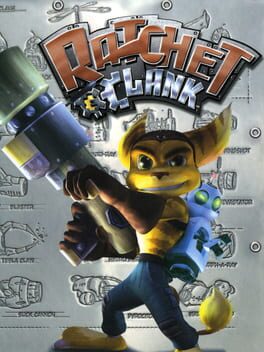
Ratchet & Clank is a 3D platform-adventure game featuring the protagonists Ratchet, a furry alien creature, and Clank, a small robot. The two travel across the galaxy in search of Captain Qwark and ultimately become involved in an effort to prevent a threat to the galaxy. The game follows conventions established by earlier 3D platform games such as Rayman, Sonic, and Mario while introducing its own mechanics and structure. Its levels consist of large environments with detailed buildings and distant areas that can often be reached and explored. The game also includes several gameplay sequences outside its standard platforming, including space combat and first-person turret sections resembling Missile Command. The game contains more than twenty levels, each set on a different planet, along with numerous real-time cutscenes that develop the story. Progression is partly non-linear, requiring the player to revisit previous planets to complete objectives and offering multiple routes through portions of the game. Ratchet can also acquire or purchase a range of weapons, gadgets, and accessories, each providing different functions in combat, exploration, or puzzle-solving.
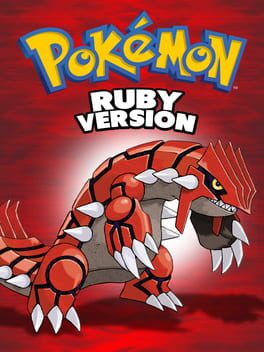
Sequel to Pokémon Gold and Silver Versions (1999), Pokémon Ruby and Sapphire Versions offer 135 new Pokémon, more complex battling and training systems, new crime organizations, a longer and more story-focused campaign and upgraded graphics to create a new and technically improved Pokémon experience.