
More games like ~Hack~ Pokémon Grape Version

players who liked ~Hack~ Pokémon Grape Version also liked:
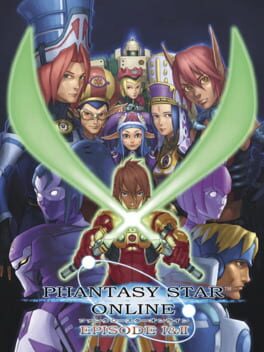
Create your own character from one of three races (Android, Human, or Newman) and choose a class (Hunter, Ranger, or Force type) to journey through the new world of Ragol. Play with up to 3 other people. Progress through 4 difficulties and complete side quest story lines to unlock better items.
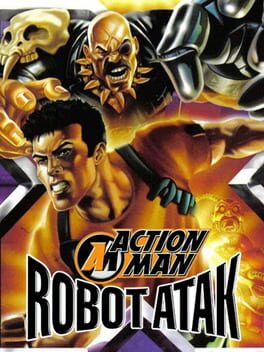
Action Man: Robot Atak is based on the direct-to-DVD animated film of the same name, in turn based on the line of toys. To stop the evil Dr. X and his army of robots that have been attacking cities across the globe, Action Force seek out his secret hideout, Island X. Dropped on different parts of the island, Action Man, Redwolf and Flint must first find each other, and then put an end to the evil doctor's plans. Most of the game's 17 levels take the form of a side-scrolling platformer with a heavy action focus. To get to the level exit, the controlled character must jump pits and gaps, climb ledges and take out many enemies, different varieties of X' robots and various animals native to the island: spiders, bats, even dinosaurs. Each character has slightly different abilities (until the finale, which hero is controlled depends on the level): Native American Redwolf always carries his bow, while Action Man and Flint start most levels with only their fists. They can pick up weapons, though, including throwing discs (for Action Man only), several different guns (which can be further enhanced by timed power-ups) and a boomerang (for Australian Flint only). Only Flint can double jump. Picking up 50 Action Man icons gives an extra life. Regular extra lives and health power-ups are also available, and a reset checkpoint is available every few screens. Variety from the platform levels comes in two levels where Flint uses his dirt rider and Redwolf surfs the waves. These are seen from behind the heroes as they must avoid or blast away obstacles and collect Action Man icons. Action Man lives up to his name in a level where he rides a motorcycle up a volcano (shooting missiles at enemies and jumping across gaps) and another one where he straps helicopter blades to his back to fly towards the level end.
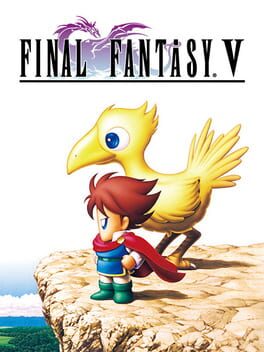
Final Fantasy V is a fantasy role-playing video game developed and published by Square in 1992 as a part of the Final Fantasy series. The game first appeared only in Japan on Nintendo's Super Famicom (known internationally as the Super Nintendo Entertainment System). It has been ported with minor differences to Sony's PlayStation and Nintendo's Game Boy Advance. An original video animation produced in 1994 called FINAL FANTASY: Legend of the Crystals serves as a sequel to the events depicted in the game. It was released for the PlayStation Network on April 6, 2011, in Japan. An enhanced port of the game, with new high-resolution graphics and a touch-based interface, was released for iPhone and iPad on March 28, 2013, and for Android on September 25, 2013. FINAL FANTASY V has been praised for the freedom of customization that the player has over the characters, achieved through the greatly expanded Job System. Despite being released only in Japan, the Super Famicom version sold more than two million copies. The PlayStation version has earned "Greatest Hits" status, selling more than 350,000 copies.
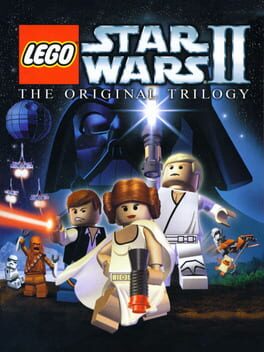
LEGO Star Wars II: The Original Trilogy takes the fun and endless customization of LEGO and combines it with the epic story, characters and action from the original Star Wars movies that revolutionized pop culture forever (Episode IV A New Hope, Episode V The Empire Strikes Back and Episode VI Return of the Jedi). With a unique tongue-in-cheek take on the Original Trilogy, LEGO Star Wars II follows the Rebel Alliances crusade to dismantle the Galactic Empire and rebuild a galaxy in pieces. Build and battle your way through your favorite film moments, from Darth Vaders pursuit of Princess Leia aboard her Blockade Runner to a showdown on the second Death Star, as the game includes even more of the family-friendly LEGO action, puzzles and humor that earned the original LEGO Star Wars such popularity and acclaim. And much more new to offer, it still has. For the first time ever, characters can get in and out of vehicles, as well as ride creatures. You can also mix and match the body parts of more than 50 playable characters to create one of millions of possible LEGO Star Wars heroes.
Sly Cooper and the Thievius Raccoonus is a stealth-platformer developed by Sucker Punch Productions and published by Sony Computer Entertainment. Released in 2002 for the PlayStation 2, the game follows Sly Cooper, a skilled raccoon thief, as he and his gang attempt to recover the Thievius Raccoonus, a book containing the secrets of his family's thieving legacy. The gameplay combines stealth, platforming, puzzle-solving, and light combat, and is noted for its cel-shaded visuals and humorous narrative. This game is divided into five worlds, each themed around a particular part of the world and the villain headquartered there. Most worlds are structured as a central hub with entrances to numerous individual levels. Each of the levels has a primary goals which earns the player a key. You must collect all the keys in the world to fight the world's boss. Many of the levels have a platformer structure. The objective of these worlds is to reach the location of the key. There are substantial stealth elements here as the player must dodge searchlights and trips lasers which set off alarms and avoid alerting guards. In addition to the main objective, there are clue bottles to find. Finding all the clues in a level allows you to open a safe with a page from the Thievius Raccoonus which grants a new ability of some sort. After getting this, there is also a master thief sprint where the player must get from the start of a level to the exit within a time limit.
The Legend of Zelda: The Wind Waker is the first Zelda game for the Nintendo GameCube and also the first in the series to employ cel-shading, a lighting and texturing technique that results in the game having a cartoon-like appearance. Like its predecessors, The Wind Waker is an action game with puzzle-solving and light role-playing elements. Basic gameplay mechanics are similar to those found in Ocarina of Time, but it differentiates itself with its massive Great Sea which must be explored using a boat named King of Red Lions.
Sequel to Pokémon Gold and Silver Versions (1999), Pokémon Ruby and Sapphire Versions offer 135 new Pokémon, more complex battling and training systems, new crime organizations, a longer and more story-focused campaign and upgraded graphics to create a new and technically improved Pokémon experience.
Pokémon Red, along with Pokémon Green, are the first video games in the Pokémon series of games. They are the first paired versions of Generation I. Developed over the course of several years, Red and Green established several standards for later Pokémon games and sequels. They take place in the Kanto region, with the player having to collect eight Gym Badges to become the Pokémon Champion while also completing the Pokédex by collecting all 151 Pokémon.